Particles of Smoke

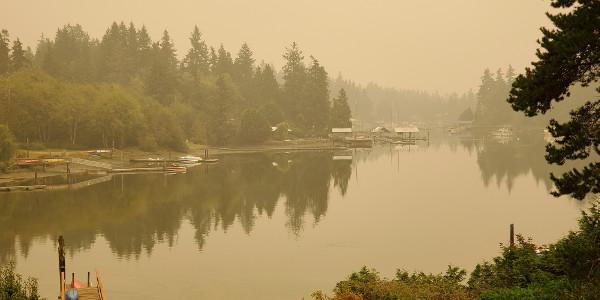
As I write this, our island, and much of the west coast, is being heavily infused with smoke. It’s coming from massive wildfires in California and Oregon, blown north by the prevailing winds.

It’s high noon, and everything is a dreary brown. The world looks like one of those old sepia prints with all the joy and life sucked out. Our windows are closed tight, and the air purifier is striving mightily to collect all the smoke particles that have managed to burrow their way into the house.

While out walking the dog with my N95 strapped on, I marvel at how dense and pervasive the smoke is. It must take gazillions of tiny products of combustion to block so much of the sunlight and foul the air. I think about how each of these smoke particles made the epic journey north. For example, as it crashed to the charred ground, an immolated Douglas fir deep in the Klamath National Forest in northern California sloughed off a chip of ash from a high branch. It was then carried aloft by a swirl of hot air, rose higher and higher, and spun out individual particles.

I imagine tracing one of those smoke particles on a 3-D map: Up, down, spinning around, going out to sea, then being pushed back to land as it travelled as part of an enormous pulsing pack. It back-tracked, zigged and zagged, then slowly lost altitude over Bainbridge Island. Drifting downward, it daintily settled on the visor of my hat. Then, right next to that minute fragment of the Doug fir may have settled a particle of smoke originating from the roof joist of a barn near Clackamas, Oregon.

After hundreds of miles of mixing, it’s clear that the pall of particles blocking the sunlight is actually a motley collection of bits thrown together from the residual of burned trees, buildings, animals, and grass from dozens of fires hundreds of miles apart. Thus, this smoke is a profound reordering of the pre-fire relationship of matter from forests and towns all over the northwest.

But then, I think, this massive mixing of matter isn’t confined to cataclysmic events; it happens all the time. For example, though I think of my body as a single unit, it’s made up of a vast number of widely sourced components. Consider the keratin forming the tip of the leftmost eyelash of my left eye. One of the carbon atoms making up part of that polypeptide chain may have come from the Bocca Burger that had for lunch with chipotle mayonnaise and a pickle a few weeks ago. And another part of that chain might have been derived from a bit of an epithelial cell from my tonsil that sloughed off, was swallowed, re-digested and reabsorbed by my small intestine. And for all I know, even before it was part of my tonsil it came from the crust of the fabulous pizza I had at Roberta’s in Brooklyn before covid, when it was still possible to eat out.

And so on, for the entire complex assemblage of my physical body—the noodle soup we ate after our arrival in Shanghai, a drop of sea water that landed on my upper lip as I paddled my kayak in our little cove, the awful bagel we had at that restaurant in Victoria, the mustard greens from the stir fry made entirely from the bounty of our garden last summer. Such diverse sources of matter are incorporated into my vagus nerve, and my right atrium, and the lining of my pancreatic duct.

So, like the huge mass of smoke swirling around me now, we’re all composed of ever-changing material from disparate sources, temporarily joined together. But as Carl Sagan famously said, the ultimate origin of all the shifting components of the smoke, of me, and of everything on earth unites everything together again: “We’re made of star stuff.”

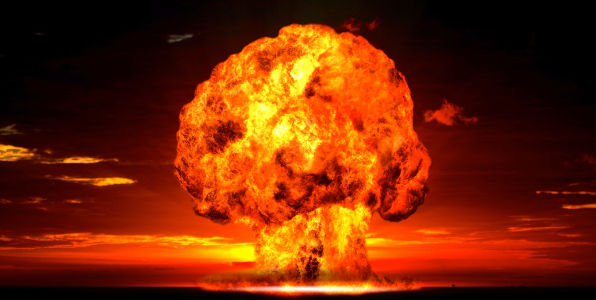
Dancing under a mushroom cloud

One evening in late October 1962, my father was driving me to a ballroom dancing lesson. I was an awkward 14-year-old, very shy, and a horrible dancer to boot. I dreaded these lessons. Foxtrot was the least painful for me since it was pretty easy to slur my steps and keep from hitting my partner’s shoes. And waltz wasn’t too bad since most of the time I could actually hear the ONE-two-three, ONE-two-three beat, and launch my feet in sweeping Ls accordingly. Cha-cha was way too intricate, and tango was simply out of the question.

We were in our tiny Fiat 600, well before the days of seatbelts and air bags. The radio was on high volume, competing for audibility with the various rattles of the car. The news announcer was reporting on the increasingly tense showdown between Kennedy and Khrushchev over the Russian missiles in Cuba. The US had set up a blockade to intercept all ships heading toward Cuba. The Russians said they would ignore the blockade, and threatened war. A showdown seemed imminent. My father was completely silent, eyes fixed on the road ahead. When we arrived, I said goodbye with uncharacteristic emotion. I thought I might never see him again.

The dance lessons were conducted in the basement of the house of a matronly woman whose name I forgot half a century ago. The floor was dark linoleum, and I think the walls were cinderblock painted white. Other than the staircase that went down from ground level, the only connection to the outside world was a narrow, horizontal rectangular window high up on the wall. The music came from a little record player sitting on a cabinet.

The class consisted of about 6 boys and 6 girls, some nearly as nerdy as me. The instructor paired us off into uncomfortable couples, and we waited for the scratchy record to begin. I was horribly self-conscious on the best nights, and this wasn’t one of the best. It was hard to concentrate, even on the Foxtrot. I kept glancing up at the rectangular window, expecting at any moment to see a bright orange flash.

In school we’d been regularly drilled in what to do when the air raid alarm sounded. If we were in a classroom we were to dive under our little desks and curl up in a protective ball, hands over the backs of our necks, eyes closed. If we happened to be changing classes, we were supposed to drop where we were and lie prone on the floor, our heads against the base of the lockers and our feet sticking out into the hallway. Since the dance studio had neither desks nor lockers, I had no idea what I was supposed to do when we heard the sirens.

Somehow the molasses-infused time passed, no sirens rose above the music, nothing flashed, and the lesson was over. We all emerged from the potential basement tomb and silently dispersed to the cars of our waiting parents. I don’t remember the radio being on on the drive home—perhaps the crisis was over. Or maybe it had become even worse. Ultimately, of course, Khrushchev backed down, the missiles left Cuba and we were once again safe from imminent annihilation. But somehow, ever since, I’ve never enjoyed dancing.

Sealy

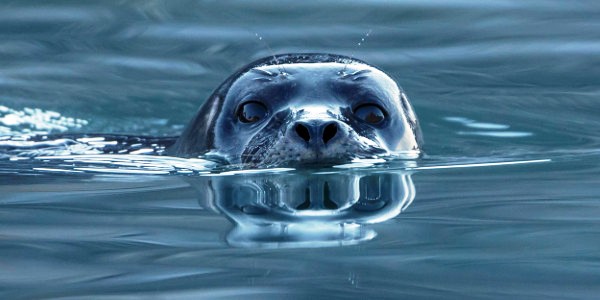
When we look out onto the little cove in front of our house, we often see a harbor seal. With its head poking out of the water it carves a little wake as it swims around our dock. We call “him” “Sealy.” Sealy is usually by himself, and we worry that he might be lonely. But occasionally he has a companion, which makes us happy. Sometimes Sealy follows our kayaks when we’re out paddling—he shows off by corkscrewing underneath the boat and coming up the other side, surfacing and staring at us with his liquid brown eyes, while gravely flicking his whiskers and softly snorting. But even from that close, Sealy always looks the same—like a seal. Suddenly, several years ago it occurred to me that maybe all the sightings weren’t of a single seal, but of a whole multitude of them—Sealys 1 through 20, say. How can you tell one seal from another, since they all look the same?

Between my third and last years of medical school, I went to Northern Thailand to do medical research. Back then there were very few westerners in that part of the country. After about six months I realized that on casual glance I could often tell whether a person I encountered in the hospital or the market was an ethnic Thai, from one of the various hill tribes, or an ethnic Chinese, who commonly lived in Thailand. Not by any special effort, but just automatically. Unexpected, however, was that as the Asians I was living among began to look quite distinct, I became unable to distinguish among the western tourists who occasionally came through our town. At the night market, where we often went for dinner, we’d sometimes hear English or German or French spoken at a nearby table. I’d look up, and see some white people–they all had the same pale, reddish skin, bulging eyes, and big noses. They all looked vaguely familiar: I kept thinking that I knew them, but wasn’t sure exactly who they were. It was unsettling. I was much more comfortable looking at the Thais at the other tables.

Occasionally, we’d travel to a remote village to follow up on a patient we’d cared for in our hospital. There was a lot of medical equipment to carry, and the paths up into the mountains were too narrow and twisty for any vehicle. So we’d bring along elephants to schlep the loads. Occasionally on the way up we’d encounter a Kariang hill tribe family on the way down; they would have to climb up the slope next to the path to make way for the elephant brigade. Then, after the elephants passed they would come back down, wave, and say the equivalent of “hi!” to the Thais in our group. But when they saw me, they’d start laughing and pointing and talking quickly to each other. Then a bold one, usually a child, would approach me and stroke my moustache or carefully trace the skin of my arm with their fingers. I don’t think it occurred to them to look me in the eye, or even to talk to me; they rightly figured there was no way I could understand them, or they me. I wasn’t an individual, but rather a random member of an exotic species—an undifferentiated white man. I was the human equivalent of Sealy. Though the Kariang examined and stroked me in good humor and completely without malice, it was still unsettling.

Having had a more attenuated but similar reaction to white people in the night market, I could understand the Kariang’s reaction much better than if I’d never had that experience. And I more deeply understand how easy it is to “other” groups of people we aren’t familiar with. “Sealy” is now simply “a seal.”